
 EN
EN
Quality and Construction of Materials: The Core of a Good Waist Trainer
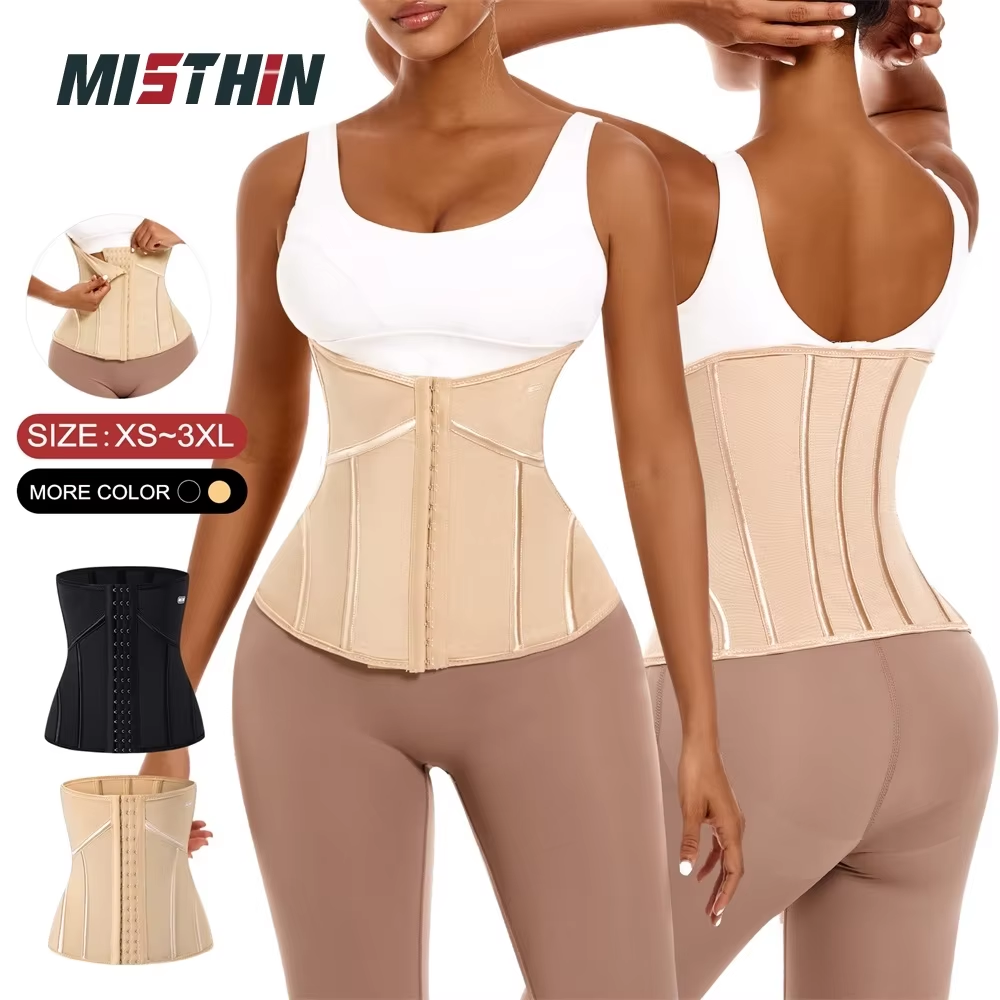
With any premium waist trainer, the construction style and materials used are of the utmost importance. Premium waist trainers will often use a multi-layered construction style with each layer serving a purpose to provide effective compression with comfort for the entire day.
Plastic vs. Steel Boned: Support, Durability, and Longer Lasting Wear
In terms of structural design and long-term support, steel boned is the best option. Unlike the plastic waist trainers, which will flatten or lose their shape and tensions over time, the spiral steel boned waist trainers will be able to hold their shape and maintain their resistance for hundreds of wears, all while allowing natural movement of the torso. Steel boning has the ability to hold the shape of the trainer and movement of the torso, while also ensuring that the waist trainer will not roll or bunch during any movement and activities that the user may perform. This allows the user to perform serious waist training or for the user to wear the waist trainer for long periods on a daily basis.
Latex, Neoprene, and Powernet: Striking the Right Balance Between Compression and Safety
Every material has to strike a balance between shaping power and functional responsibility. Natural latex provides consistent, responsive compression; neoprene delivers stronger thermal retention and firm hold; Powernet is designed to optimize airflow and moisture to improve comfort and reduce thermal buildup. Premium waist trainers use these strategically: a latex or neoprene core for shaping, overlaid with breathable cotton, nylon microfiber, or mesh panels for skin contact. This strategically layered approach to the material design will reduce the everyday irritation and overheating while also keeping the design functional and breathable.
Reinforced Stitching, Modesty Panels, and Flexi-Bone Technology as Hallmarks of Craftsmanship
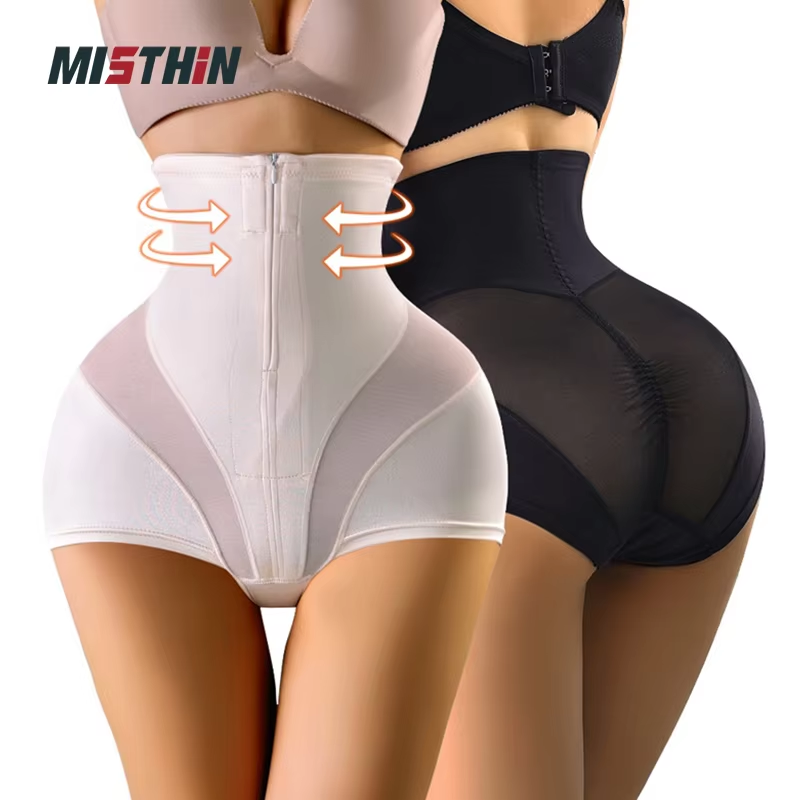
Construction quality is in the details. Reinforced seams—often triple-stitched or bar-tacked at stress points—help seams hold together under pressure, resisting fraying at the edges. Modesty panels provide an extra layer, preventing skin contact and thus extend the lifespan of the garment and improve the comfort and hygiene of the user. Flexi-Bone technology takes this a step further and embeds flexible polymer supports at the under the bust and lower back to provide the user responsive support. Together, these features ensure lasting performance and anatomical responsiveness.
Anatomical Fit and Sizing Precision
A waist trainer must fit the user’s body, not the other way around. When a waist trainer is sized to optimal design standards, it aids in the posture improvement and the activation of the deeper core stabilizers.
The correct measurement for the natural waist and torso length
The natural waist, the narrowest point to the ribs and hips, is the most important part of the measurement. To find your natural waist, you must stand relaxed, exhale effortlessly, and then measure yourself at your natural waist with a soft tape. Your torso height is equally important. The torso height is important, and may be a cause of rib cage compression to a short torso as well as insufficient coverage to a long torso. A 2023 apparel ergonomics study discovered that 68% of the study population reported significantly improved comfort when vertical proportions were taken into account. You must measure yourself without clothing and check the fit/sizing guide of the brand to gain better fitting garments.
Moving Beyond Size Charts: Why the Real-Body Variability Needs Fit Solutions
Standard size charts do not capture the complex reality of body diversity that includes hip to waist ratio, rib flare, spinal positioning, and musculature. Given that 42% of waist trainer returns happen because of a lack of anatomical alignment, even “correct” size chart-based fittings do not work. Solutions include the following:
- Adjustable hook and eye closure (3–5 rows) to accommodate size fluctuation on a day-to-day basis
- Tapered silhouettes to provide additional waist suppression
- Contoured boning that follows the curvature of the lumbar and thoracic spine
- Stretch-flex panels to accommodate larger shoulders and/or athletic builds
Brands that offer individualized consultations with multiple silhouettes to pick from, or use fit calculators, provide the safest and most effective compression.
Choosing the Right Waist Trainer for Your Goals Compression Levels and Purpose Alignment
Each goal requires a different level of compression. Whether the goal is to remain aware of one’s posture, engage one’s core, or achieve a temporary desired look, each entails a range of compression. Choosing the wrong compression level can lead to irritation, frustration, and negative consequences on one's health. When considering compression levels, the use case can fall into one of three categories: Posture Support, Core Activation, or Fashion Enhancement.
Light compression creates a gentle, all-day supportive environment that can be used to retrain one’s posture and can easily be worn under clothing. Mid-range compression provides more of a stabilizing and supportive environment for core activation during everyday activities. High compression is used to enhance temporary appearance and is best used when engaged in focused waist training. When considering of the effects of high compression clothing, digestive slowdown and circulatory compromise can be effects of too much sustained use of this high compression range. Limit daily use to 2-4 hours.
Safety First: Evidence-Based Guidelines on Duration, Contraindications, and Health Risks
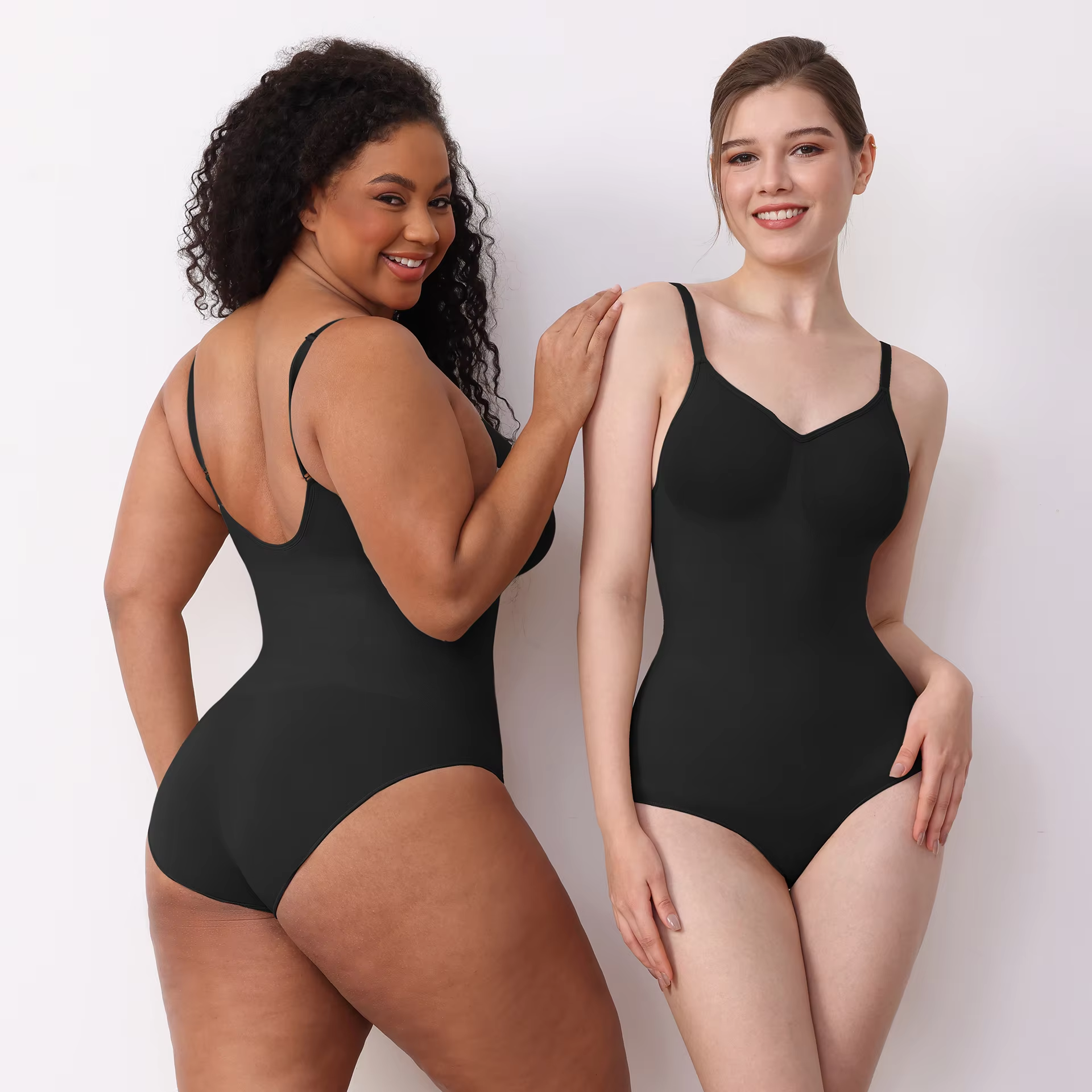
Beginners should aim for a daily use of 1–2 hours, building up gradually over time. The daily limit should be kept at 8–10 hours. Prolonged overnight use is not recommended at all. High-compression sleep training can lead to diaphragmatic restriction and gastric reflux. People with acid reflux, hiatal hernia, respiratory issues, and some circulatory disorders, should get a physical check-up before use. If pain, numbness, or tingling occurs, along with dizziness and breathlessness, the product should be removed instantly. Frequent use, despite the straps being a good fit, can lead to Intercostal Nerve injury and delay gastric Emptying. Opt for waist trainers with breathable and friendly materials like Soft Cottons and Powernet, and remember that waist trainers are not a substitute for professional medical treatment or an effective fitness regime.
FAQs
What is the best material for waist trainers?
The best waist trainers often use a combination of materials like latex for compression, neoprene for thermal retention, and Powernet for breathability, layered with skin-friendly fabrics like cotton or nylon microfiber.
Why is steel boning preferred over plastic?
Steel boning provides superior durability and structural integrity, preventing warping, rolling, and slippage over time, unlike plastic which degrades more quickly.
How do I measure correctly for a waist trainer?
To measure correctly, identify your natural waist (the narrowest point between your ribs and hips) and measure snugly with a soft tape. Consider your torso length for optimal fit and comfort.
Are waist trainers safe for everyone?
Waist trainers aren’t ideal for everyone. There are many conditions that can be aggravated by waist trainers that include circulatory issues, respiratory issues, acid reflux, and hiatal hernias. It is always best to consult a physician, and it is best to use waist trainers that are more breathable and don’t irritate the skin.
How long can I wear a waist trainer daily?
It is best to start with an hour or two a day. Gradually, the time can be extended. The maximum safe time is 8–10 hours a day. Anything more can be potentially harmful.